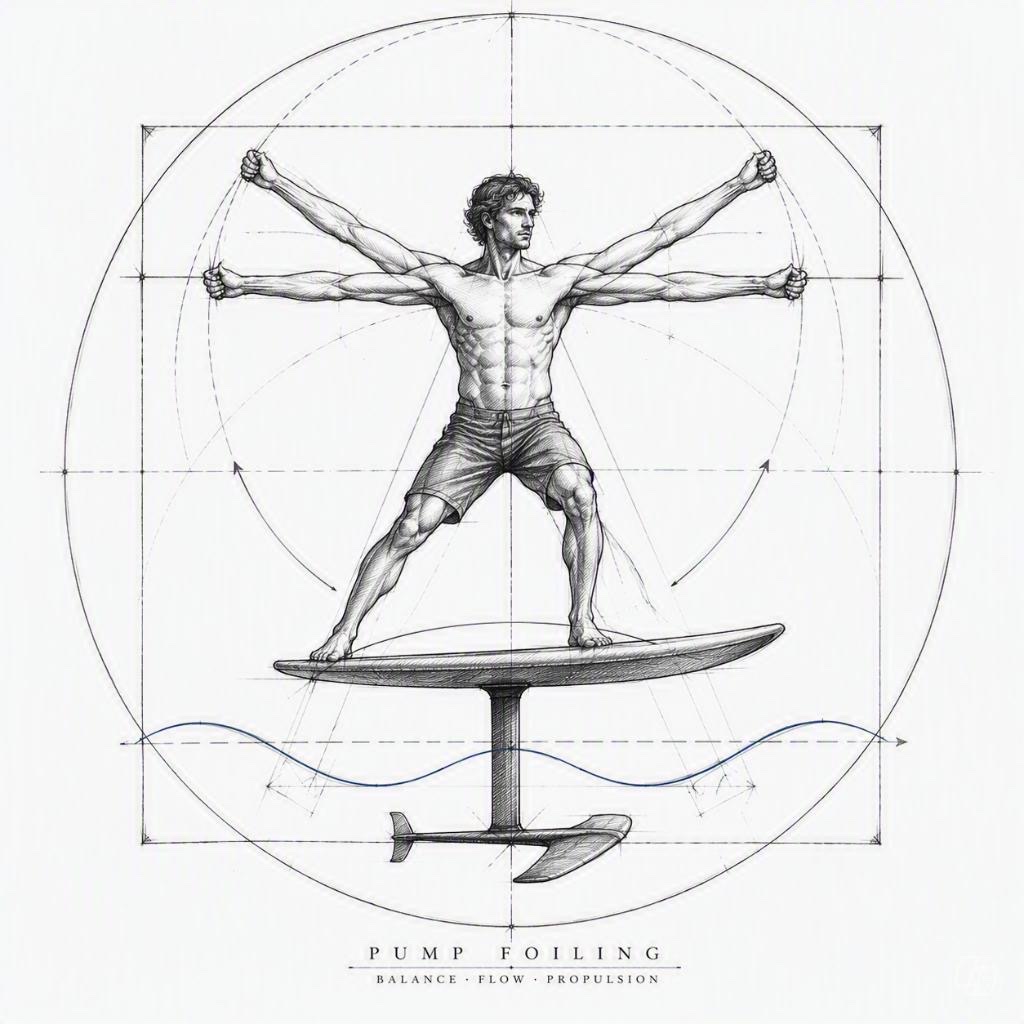
Rider and water
This group models load and fluid — both strongly affect take-off, glide ratio and pump power.
Rider mass
Your weight plus gear is the load the foil must carry.
- More mass: higher take-off speed, steeper angle of attack, more pump power
- When pumping, mainly the legs move — the upper body stays relatively still
- Profile: lasting value under “My profile”. The slider may diverge for what-if runs; the Profile button next to the info tip restores the stored value
Range: 35–150 kg.
Water temperature
Controls how “viscous” the water is. Colder water → higher kinematic viscosity → more friction drag, earlier stall.
| Temperature | Effect (fresh water) |
|---|---|
| 5 °C | high viscosity, more drag |
| 18 °C | near reference |
| 30 °C | thinner, slightly less friction |
Density changes only slightly; viscosity is the dominant effect.
Salinity
Salt water is denser than fresh water (~2.5 % typical in the Mediterranean). The same lift needs slightly less speed.
Presets in the app set typical values for lake, Baltic, Mediterranean and Atlantic.
Density and viscosity feed into take-off, best glide, Vmax and pump metrics — same setup, different water → different numbers. Set the parameters in the control column under Rider and water.
Reset
Reset rider & water restores temperature and salinity defaults; mass comes from the profile weight if set, otherwise from the default.
Profile (next to the rider-mass info tip) restores only mass to the profile value.
What you should see
Increase weight by 10 kg:
- Take-off rises (metric and panel D)
- Pump power (metabolic) rises
- Reynolds at the front wing stays the same at the same analysis speed
→ FAQ